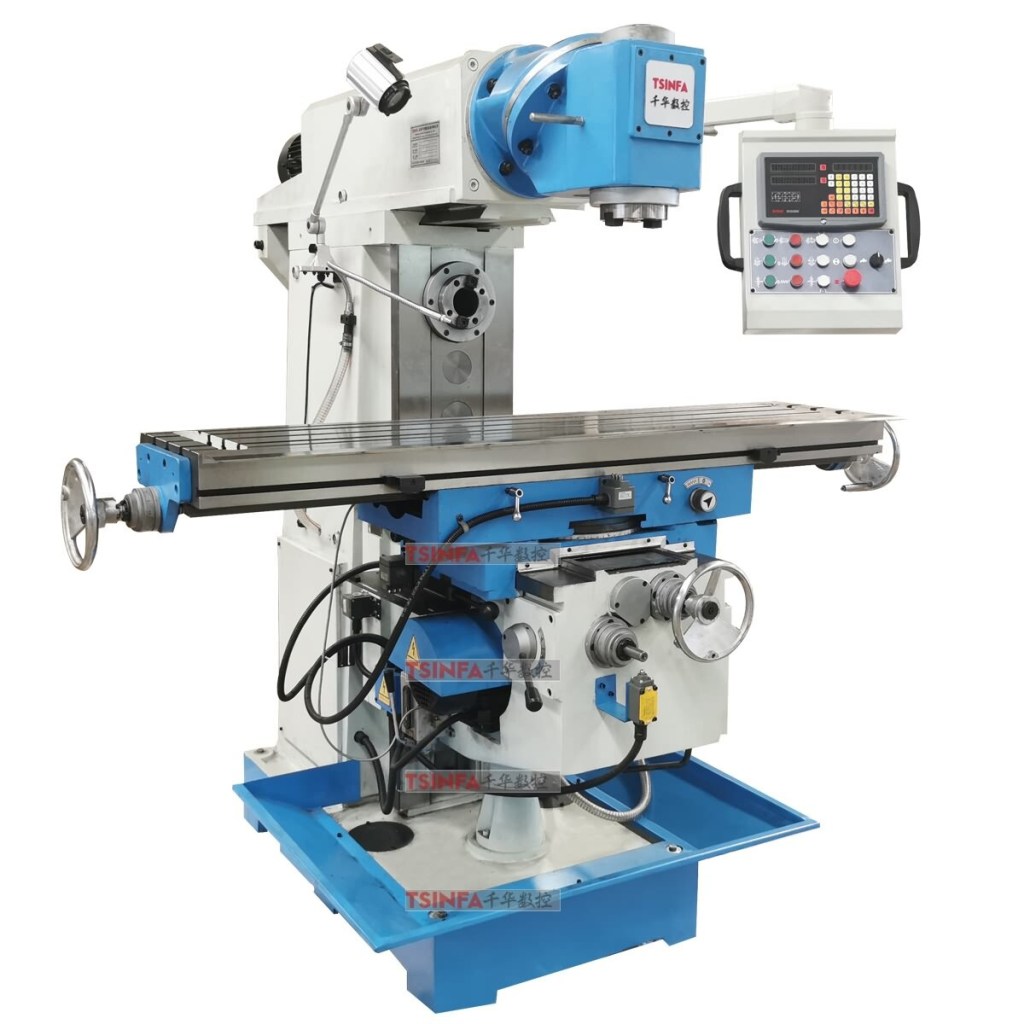
A milling machine is one of the most widely used machines in the manufacturing industry. It plays a pivotal role in shaping, cutting, and drilling solid materials—primarily metal—into precise parts. Whether you are fabricating automotive components or crafting aerospace parts, a milling machine can transform raw stock into a finished product with tight tolerances and fine details.
In this article, we will explore everything you need to know about the milling machine—from how it works and different types available to its major components and practical applications in various industries.
What Is a Milling Machine?
A milling machine is a mechanical tool used for machining solid materials. It removes material from a workpiece using rotary cutters. The workpiece is usually mounted on a movable bed, while the cutting tool rotates and moves across the material in various axes. This allows for high-precision cuts and versatile shapes.
The process is called milling, and it is fundamental in producing parts for industries such as automotive, aerospace, electronics, and more.
How Does a Milling Machine Work?
At its core, a milling machine rotates a cutting tool against a stationary or movable workpiece. Depending on the machine’s design, either the tool or the table can move in different directions—typically along the X, Y, and Z axes.
- X-axis: Moves left and right
- Y-axis: Moves front and back
- Z-axis: Moves up and down
Multiple axes allow for complex, multi-dimensional shaping in one setup. The rotation speed, depth of cut, and feed rate can be adjusted depending on the material and desired finish.
Key Components of a Milling Machine
A milling machine consists of several important parts that work together to achieve precision and functionality:
- Base: The foundation that supports all other parts
- Column: The vertical part mounted on the base, providing support
- Knee: Attached to the column and supports the table
- Table: Holds the workpiece and moves in the X and Y directions
- Saddle: Supports the table and provides Y-axis motion
- Spindle: Rotates the cutting tool
- Arbor: Holds the cutting tool in horizontal machines
- Overarm: Extends over the column in horizontal milling machines
- Motor: Powers the spindle and drives movement
Each component is engineered for precision and stability, ensuring smooth operations and accurate results.
Types of Milling Machines
There are several types of milling machines, each designed for specific tasks and operational efficiency:
1. Vertical Milling Machine
In this type, the spindle axis is vertically oriented. It’s widely used for slotting, drilling, and surface contouring. There are two main subtypes:
- Turret mill: The spindle is stationary while the table moves.
- Bed mill: The spindle moves vertically while the table remains stationary.
2. Horizontal Milling Machine
In these machines, the spindle is oriented horizontally. They are more rigid and ideal for heavy-duty tasks like cutting gears and grooves.
3. Universal Milling Machine
This versatile machine can be configured for both vertical and horizontal orientations. It’s commonly used in workshops needing adaptability.
4. CNC Milling Machine
These machines are computer-controlled and allow for precise, automated, and repeatable operations. CNC (Computer Numerical Control) milling machines can handle complex geometries and multiple tool changes with high efficiency.
5. Manual Milling Machine
These are operated by hand and are ideal for small-scale or prototype production.
Materials Machined Using Milling Machines
A milling machine can work with a variety of materials, including:
- Metals: Steel, aluminum, copper, titanium
- Plastics: Acrylic, nylon, polycarbonate
- Composites: Carbon fiber, fiberglass
- Wood: Softwood and hardwood (less common but possible)
The tool selection and speed/feed settings vary depending on the material’s hardness and brittleness.
Common Milling Operations
Milling machines perform a wide range of machining operations. Some of the most common include:
- Face Milling: Creates a flat surface on the top of the workpiece
- End Milling: Cuts slots, contours, and intricate shapes
- Slot Milling: Produces grooves or keyways
- Drilling: Performs precise hole drilling
- Tapping: Cuts internal threads
- Gear Cutting: Used in automotive and industrial applications
Each operation uses specific cutting tools designed to maximize performance and accuracy.
Applications of Milling Machines
The milling machine is used across many industries for its precision and adaptability. Key areas include:
1. Automotive Industry
- Engine components
- Transmission housings
- Brake systems
2. Aerospace Industry
- Aircraft frames
- Landing gear parts
- Turbine components
3. Medical Industry
- Surgical instruments
- Orthopedic implants
- Custom prosthetics
4. Tool and Die Making
- Molds
- Dies
- Precision jigs and fixtures
5. Electronics Industry
- Housings for electronics
- Connectors
- PCB prototyping
Benefits of Using a Milling Machine
Milling machines offer several advantages for both small and large-scale production:
- High Precision: Capable of machining tight tolerances
- Versatility: Can perform multiple types of cuts
- Repeatability: Especially with CNC machines
- Durability: Built to withstand heavy use
- Efficiency: Speeds up production time
With proper operation and maintenance, a milling machine can serve as a long-term asset for any machining facility.
Safety Considerations
Working with a milling machine requires attention to safety protocols:
- Always wear protective eyewear
- Keep hands away from moving parts
- Use proper tool holding and clamping
- Don’t operate the machine without training
- Disconnect power before maintenance or tool changes
Safe operation ensures longer machine life and reduces the risk of accidents.
Conclusion
A milling machine is an indispensable asset in modern manufacturing. Its ability to produce highly accurate and intricate components makes it a critical tool across many sectors. From simple manual mills to advanced CNC systems, there is a milling machine for every production need.
Whether you’re crafting prototypes, repairing parts, or mass-producing components, investing in the right milling machine can elevate your productivity and product quality. As technology advances, so do the capabilities of these machines, offering even greater possibilities for the future of fabrication and precision engineering.
 Site Title
Leave a comment